Twenty-year study confirms California forests are healthier when burned — or thinned

December 12, 2023

UC Berkeley researchers found that prescribed burning, restoration thinning can reduce wildfire risk and boost a forest’s resilience to climate change. And, using any combination of these treatments is far better than doing nothing.
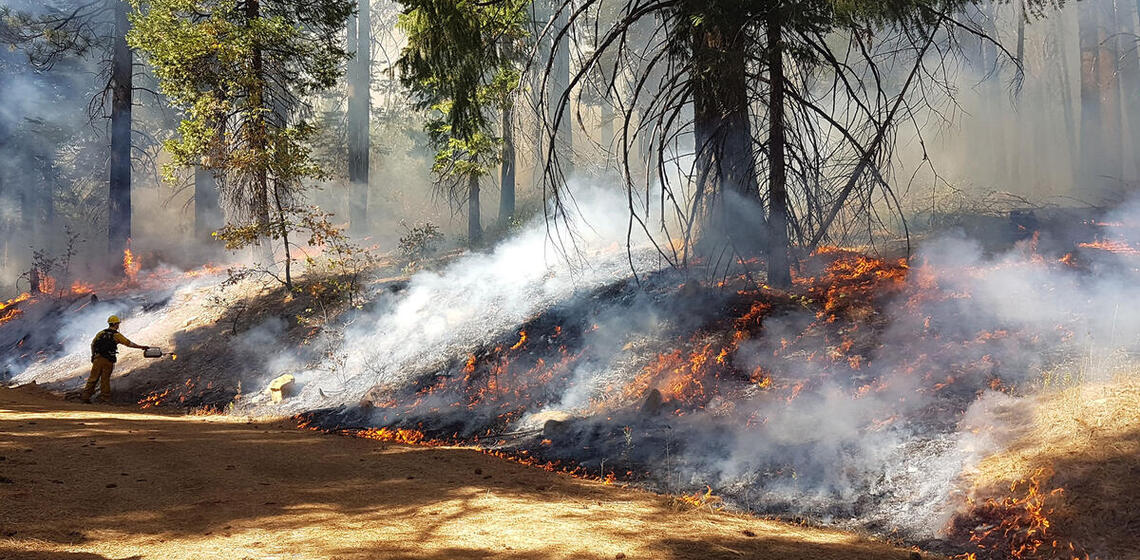
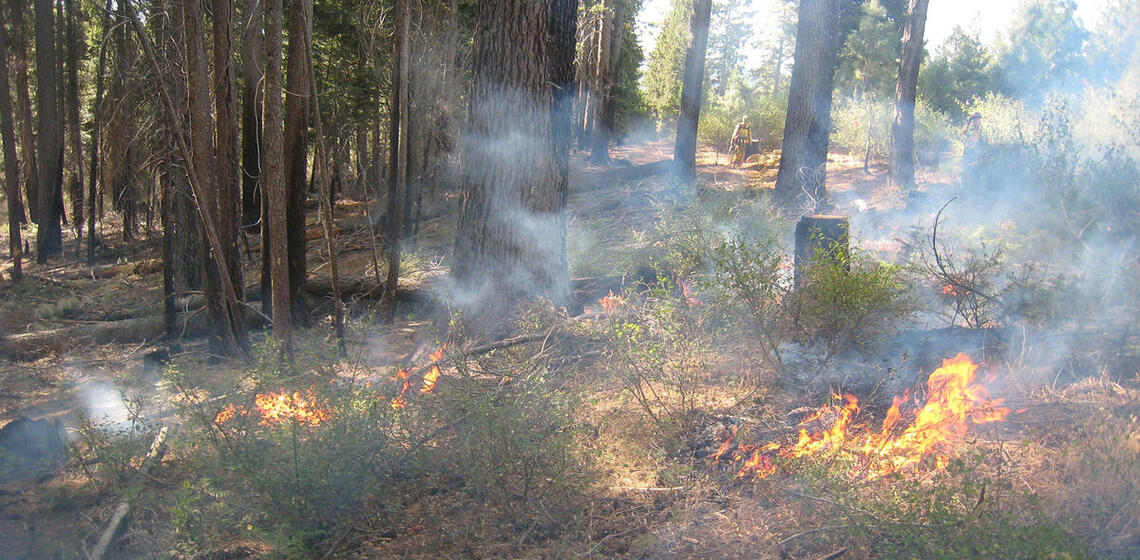
The fire burns across the forest floor, generating flames and smoke, but does

The fire burns across the forest floor, generating flames and smoke, but does not extend into the branches of the trees. In the distance, a person wearing yellow fire protection gear is holding out a drip torch.

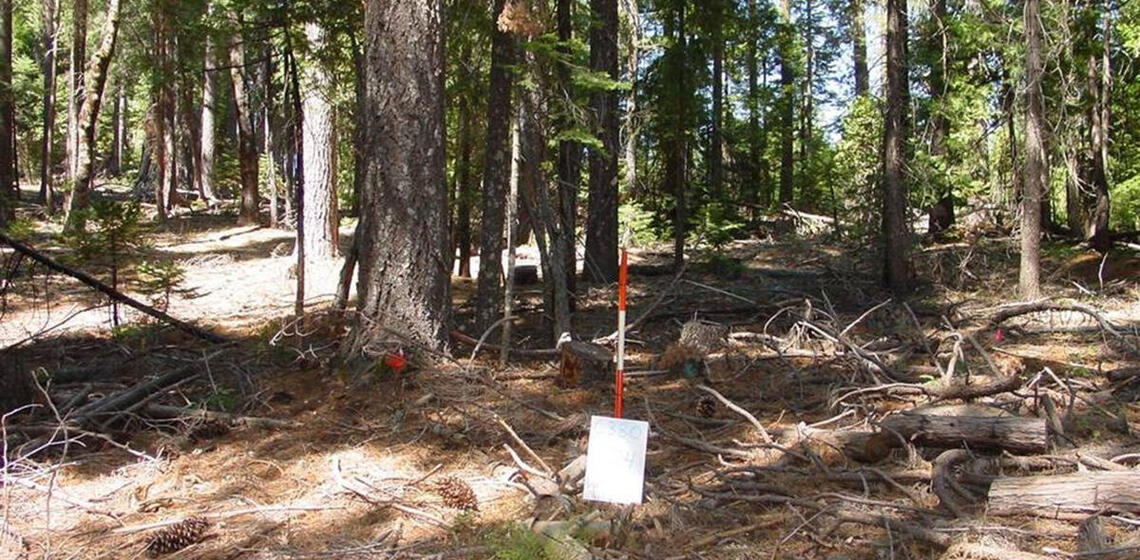
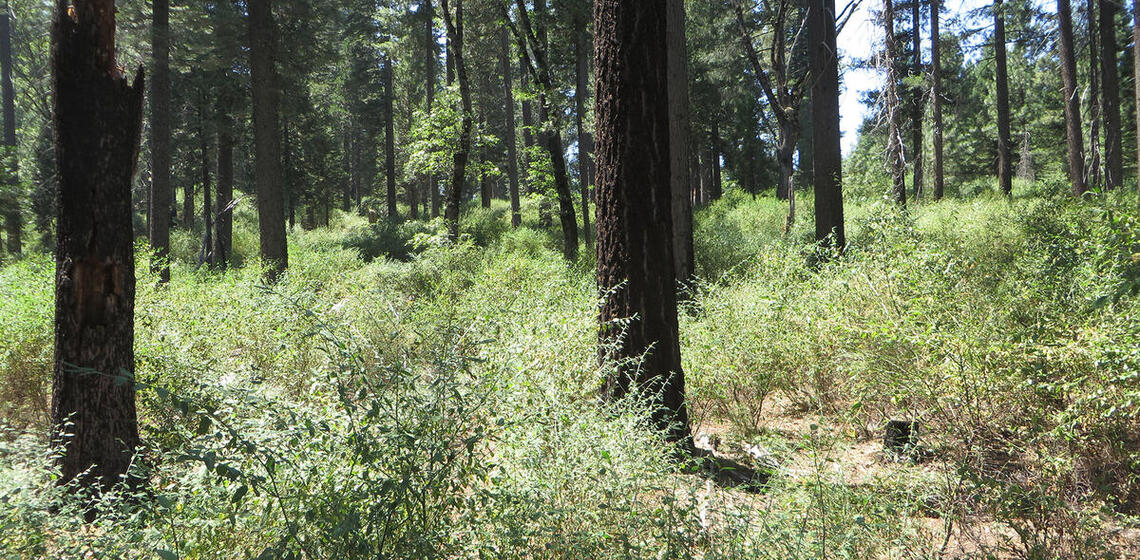
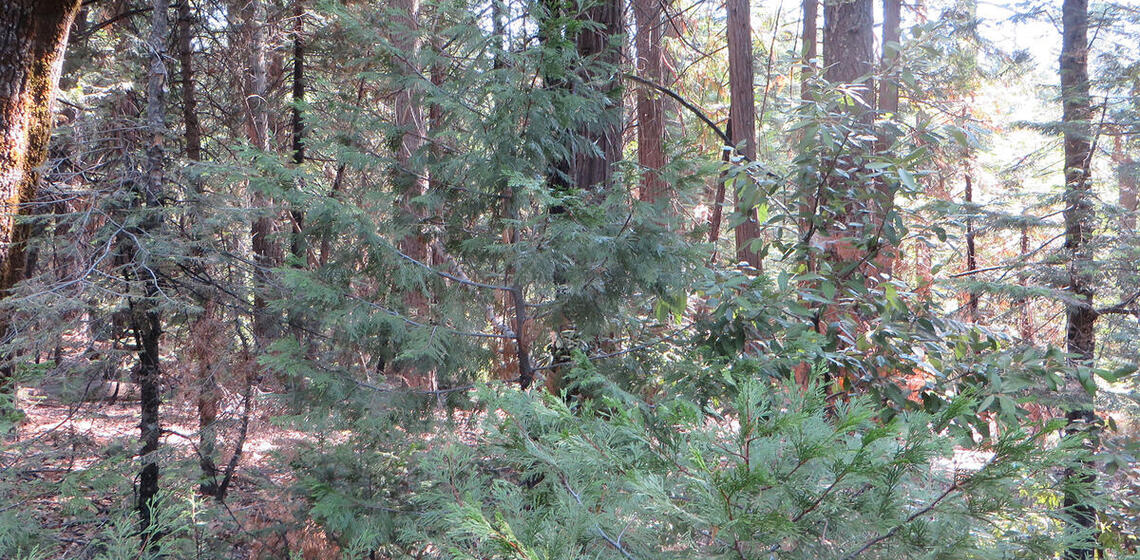
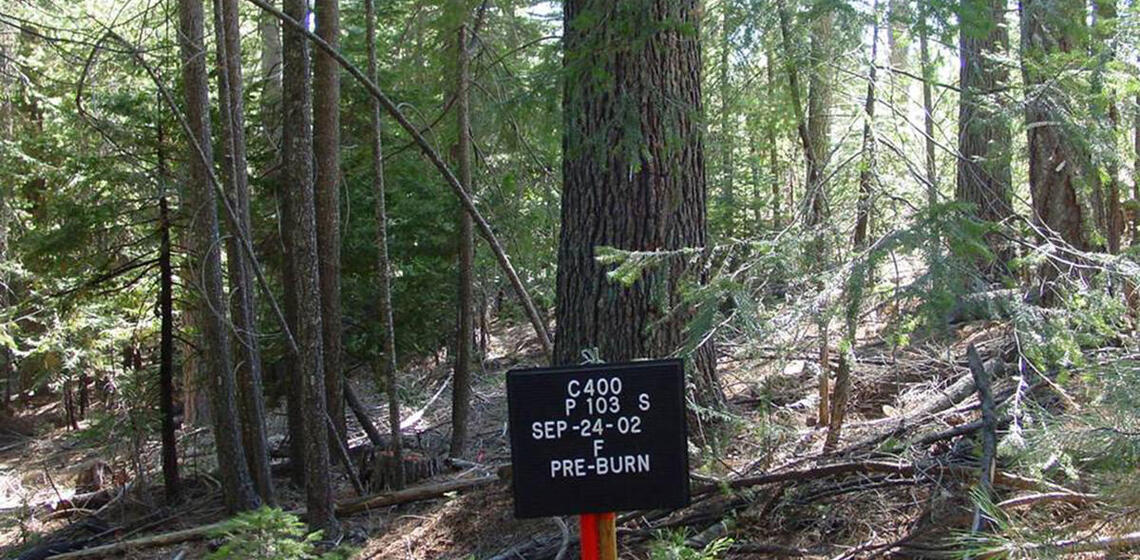
A photo of a section of a conifer forest. The forest floor is covered in dead sticks and debris, and small trees and vegetation

The forest floor is covered in dead sticks and debris, and small trees and vegetation are blocking the view. To study the long-term impacts of fire and restoration thinning, researchers at Blodgett created twelve forest “compartments” and applied different combinations of treatments in each compartment.

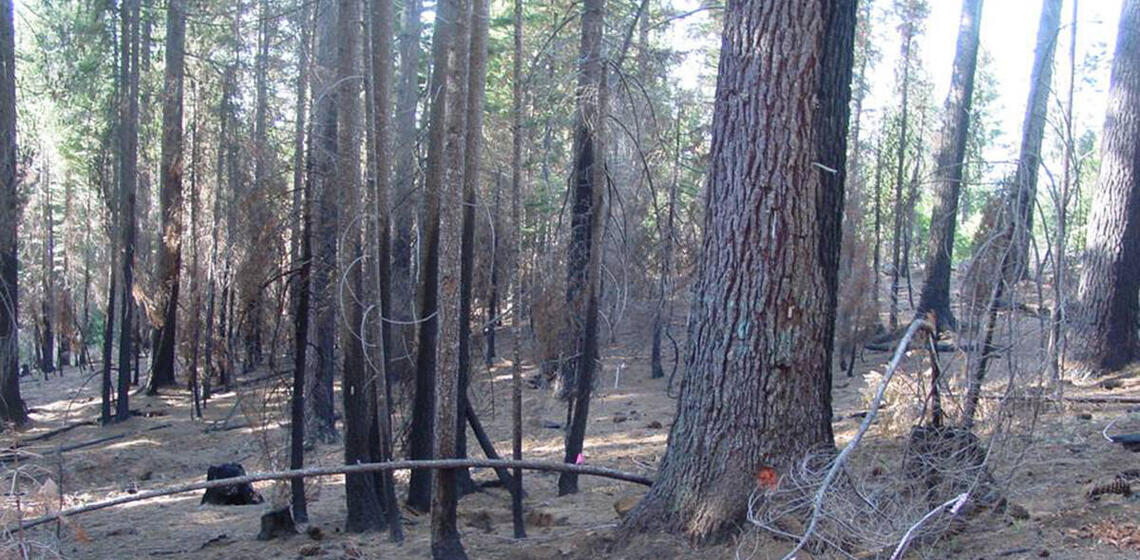
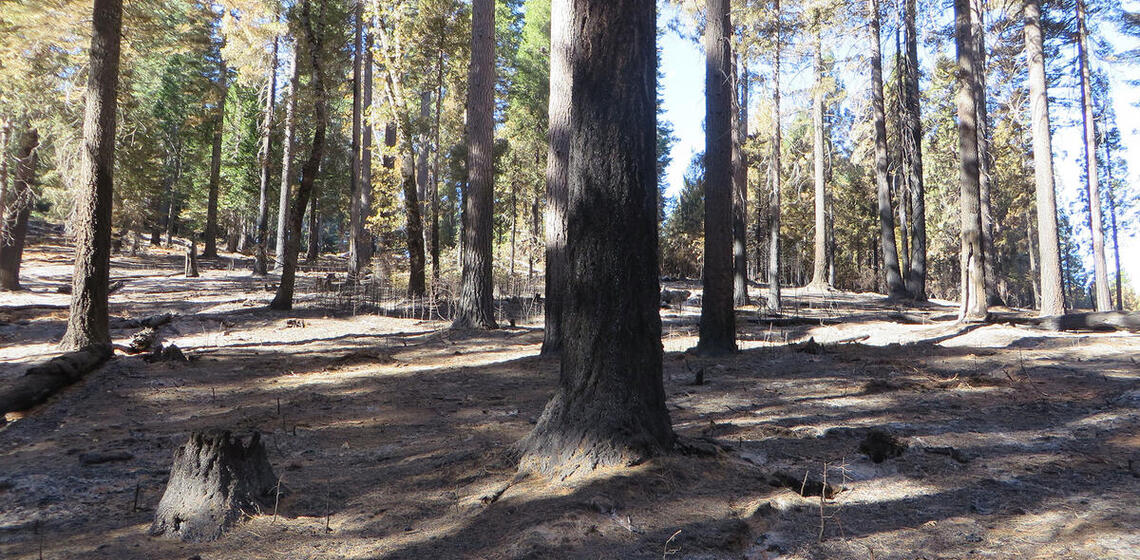
A photo of a section of a conifer forest that has recently been burned with prescribed fire. The forest floor is clear of dead s

Section of a conifer forest that has recently been burned with prescribed fire. The forest floor is clear of dead sticks and debris. Blacked scorch marks extend from the ground up the sides of some of the tree trunks.

A photo of a prescribed burn in a conifer forest. The fire is burning through small bushes on the forest floor. Blodgett’s compa

A photo of a prescribed burn in a conifer forest. The fire is burning through small bushes on the forest floor.

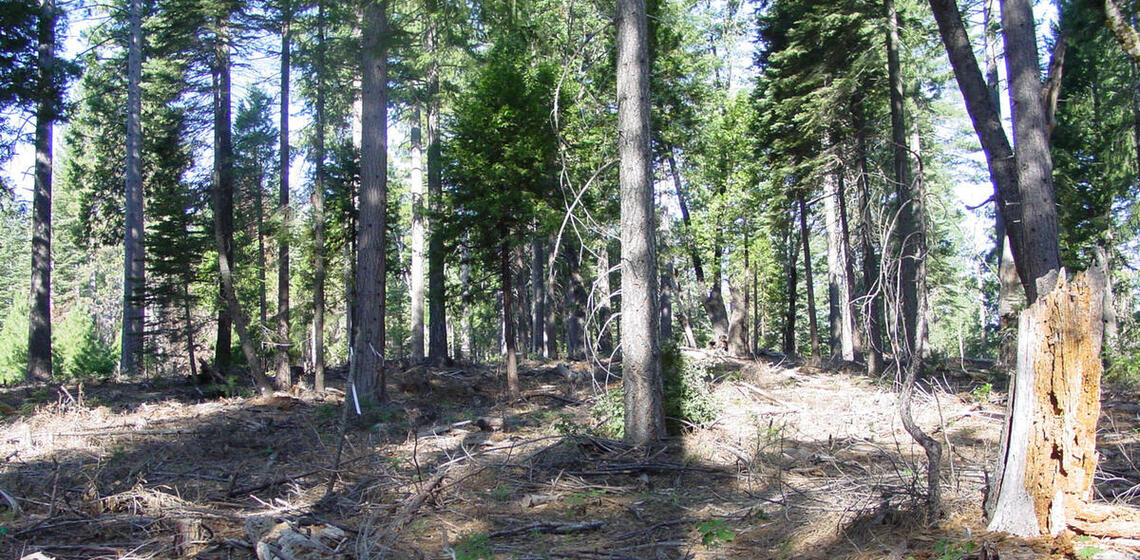
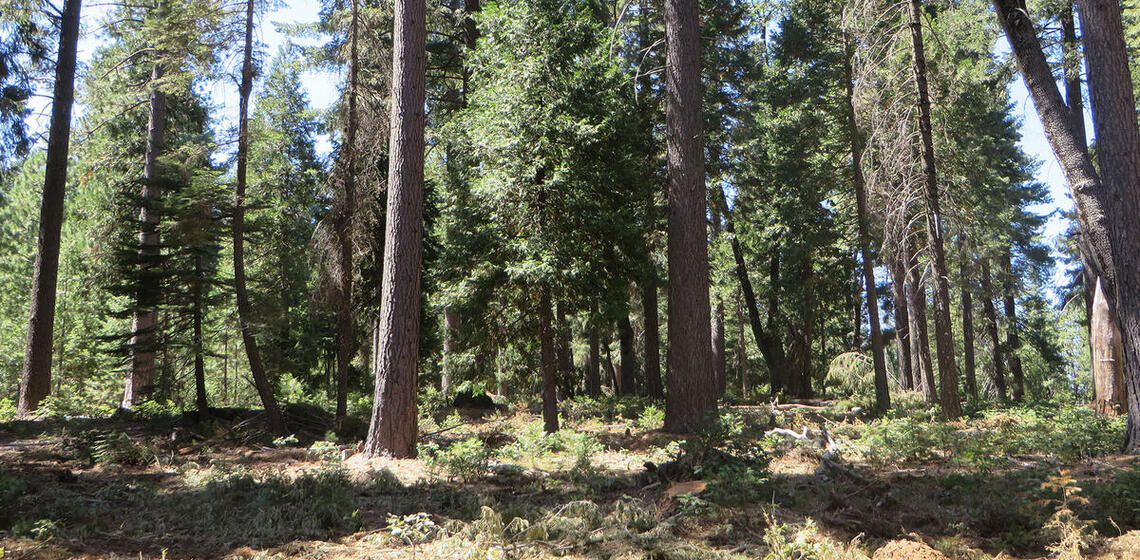
A photo of a portion of a conifer forest. The forest floor is relatively clear of debris and it is easy to see through the trees

The forest floor is relatively clear of debris and it is easy to see through the trees to other parts of the forest. Blodgett’s compartment 400 in 2018, after the land had been treated with three prescribed burns over the course of 20 years.

A photo of a section of a conifer forest. The forest floor is covered in dead sticks and debris, and small trees and vegetation

The forest floor is covered in dead sticks and debris, and small trees and vegetation are blocking the view. A second experimental forest plot at Blodgett, photographed in 2001 before any treatments were applied. This plot, labeled compartment 380, was treated with a combination of restoration thinning and prescribed burns.

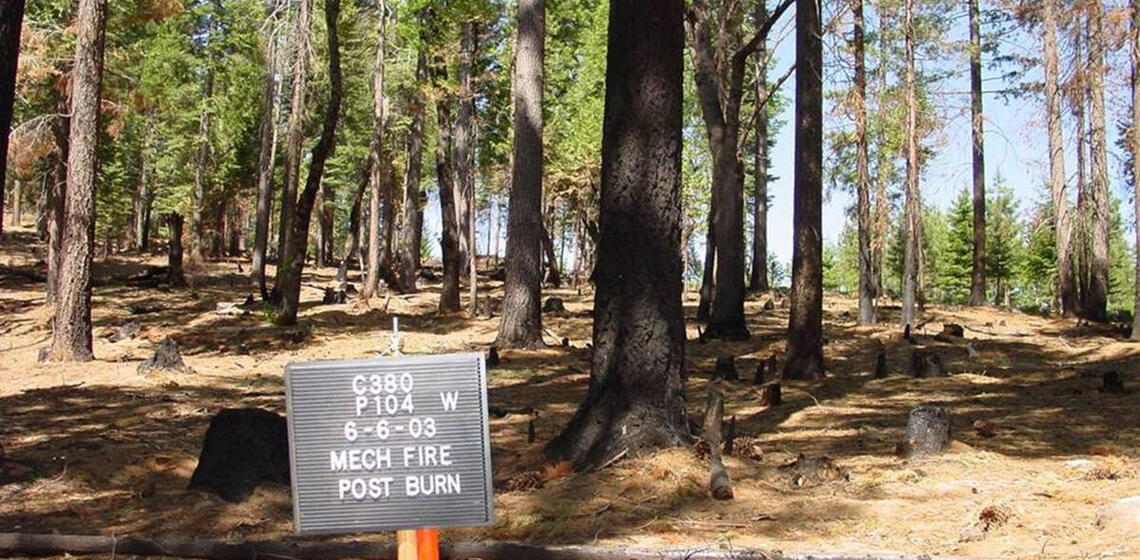
A photo of a section of a conifer forest. The forest floor is clear of dead sticks and debris.

The forest floor is clear of dead sticks and debris. Blacked scorch marks extend from the ground up the sides of some of the tree trunks. A placard placed in front of the forest reads “C380, P104, 6-6-03, Mech Fire, Post burn.” Blodgett’s compartment 380 in 2003, after it had been thinned and then burned for the first time.

A photo of a section of a conifer forest on a sunny day. The forest floor covered in small green bushes, a few feet high.

The forest floor covered in small green bushes, a few feet high. Blodgett’s compartment 380 in 2015. Twelve years after the plot received its first treatment, the understory had started to regrow.

A photo of a section of a conifer forest. The forest floor is clear of dead sticks and debris. Blacked scorch marks extend from

The forest floor is clear of dead sticks and debris. Blacked scorch marks extend from the ground up the sides of some of the tree trunks. Blodgett’s compartment 380 in 2018, after a second thinning and burning treatment. Researchers found that combining these treatments allowed them to restore the forest to a healthier, more resilient structure more quickly than they could using prescribed burning alone.

A photo of a section of a conifer forest. The forest floor is covered in dead sticks and debris, and small trees and vegetation

The forest floor is covered in dead sticks and debris, and small trees and vegetation are blocking the view. Blodgett’s compartment 350 in 2001, before any treatments were applied. This compartment was treated only with restoration thinning.

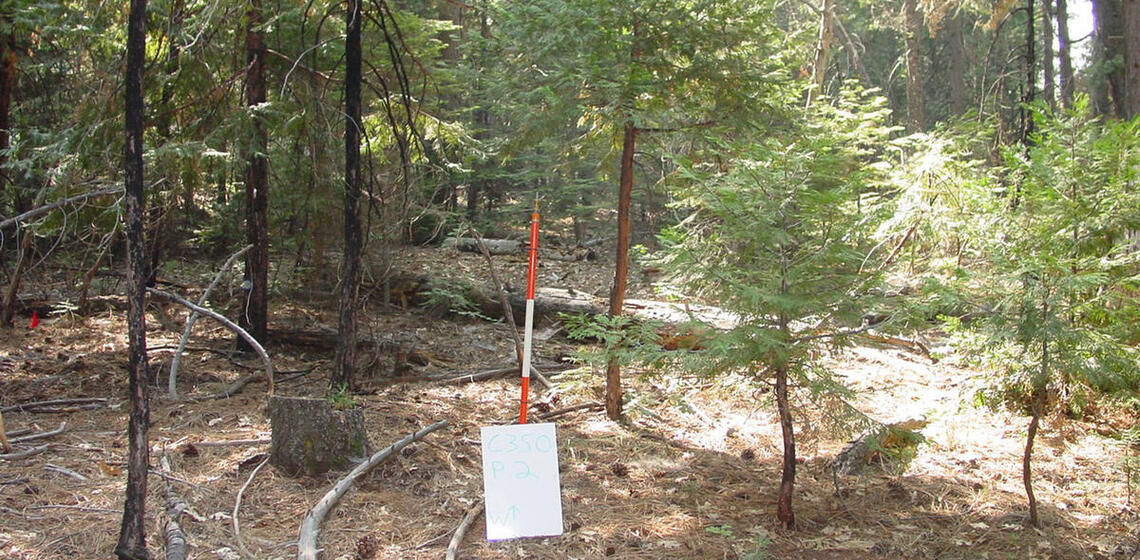
A photo of a section of a conifer forest. Larger trees are still standing but some of the smaller trees have been removed.

Larger trees are still standing but some of the smaller trees have been removed. Blodgett’s compartment 350 in 2003, after the first restoration thinning treatment. According to UC Berkeley fire scientist Scott Stephens, the goal of restoration thinning is to remove excess vegetation while preserving large, healthy trees.

A photo of a portion of a conifer forest. The forest floor is relatively clear of debris and it is easy to see through the trees

The forest floor is relatively clear of debris and it is easy to see through the trees to other parts of the forest. Blodgett’s compartment 350 in 2019, after receiving two separate restoration thinning treatments over 20 years.

A photo of a section of a conifer forest. The forest floor is covered in dead sticks and debris, and small trees and vegetation

Without active management, this plot has become so overgrown that trees face stiff competition for water, nutrients and other resources, making them highly vulnerable to stressors like drought and bark beetles.

A 20-year experiment in the Sierra Nevada confirms that different forest management techniques — prescribed burning, restoration thinning or a combination of both — are effective at reducing the risk of catastrophic wildfire in California.

These treatments also improve forest health, making trees more resilient to stressors like drought and bark beetles, and they do not negatively impact plant or wildlife biodiversity within individual tree stands, the research found. The findings of the experiment, called the Fire Surrogate Study, are published online in the journal Ecological Applications.

“The research is pretty darn clear that these treatments are effective — very effective,” said study lead author Scott Stephens, a professor of fire science at the University of California, Berkeley. “I hope this lets people know that there is great hope in doing these treatments at scale, without any negative consequences.”

Last year, California announced a strategic plan for expanding the use of prescribed fire to 400,000 acres annually by 2025. However, the use of beneficial fire continues to be hindered by multiple factors, including the lack of a trained workforce, the need for specific weather conditions for burning, and fears about potential risks.

This study shows that restoration thinning is also a viable option for forest management and can be used in tandem with beneficial fire without harming forest health or biodiversity.

“Our findings show that there’s not just one solution — there are multiple things that you can do to impact the risk of catastrophic fire,” said study co-author Ariel Roughton, research station manager at Berkeley Forests. “Folks can choose from different combinations of treatments that might fit their needs, and we can show them how those treatments might impact things like wildfire behavior, tree growth and carbon holding in their forests.”

Berkeley's forestry research on preventing extreme wildfires

Surrogates to wildfire

Over the past two decades, Stephens and other researchers at Berkeley Forests have used prescribed burning, restoration thinning or a combination of both to treat plots of land at Blodgett Forest Research Station, a 4,000-acre experimental forest located about 65 miles northeast of Sacramento on the unceded lands of the Nisenan peoples.

The Fire Surrogate Study was one of 13 studies across the U.S. first launched in 1999 with funding from the U.S. Joint Fire Science Program. Its aim was to study whether the two treatments could mimic the beneficial impacts of lightning fires and Indigenous burning practices on California’s forests, which have become dense and overgrown after a century of logging and fire suppression.

“Prescribed fire and restoration thinning are both surrogates for wildfire, a key process that happened frequently in California before European colonization,” Stephens said. “The impetus of this study was: If you’re going to implement these treatments at a large scale, is there anything that’s going to be lost?”

The study created nine experimental plots and three control plots at Blodgett. Three of the experimental plots were managed only using prescribed burns; three burns occurred over the course of 20 years. Three other experimental plots were first thinned and then burned, and the final three were treated only with restoration thinning. The control plots were left to grow without human interference except continued fire suppression.

At the end of the 20-year period, the researchers surveyed the vegetation in each plot and used computational modeling to estimate how many trees were likely to survive wildfire. They found that all three types of experimental plots were significantly more resilient to wildfire than the control plots, showing an 80% likelihood that at least 80% of trees would survive.

They also calculated the “index of competition,” a measure of how strongly trees must compete for resources like sunlight, water and soil nutrients. By removing excess trees and vegetation, thinning and burning both limited the amount of competition between trees, making them less vulnerable to stressors, like drought and bark beetles.

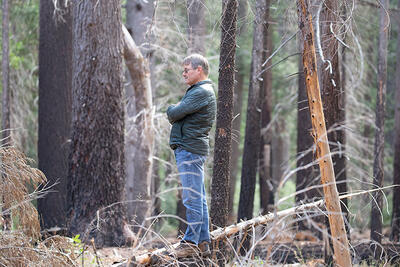
Scott Stephens at Blodgett Forest Research Station in late 2021.

Scott Stephens at Blodgett Forest Research Station in late 2021.

However, the plots that were treated with a combination of thinning and fire had the best index of competition, suggesting that they would be the most resilient to the impacts of climate change.

“When you combine thinning with fire, you’re able to modify all different levels of the forest structure, and it speeds up the timeline for achieving a more resilient structure,” Roughton said.

Restoration thinning can also provide financial benefits: Often, larger trees can be sold to sawmills, and the proceeds can be used to help offset the cost of forest management. Over the course of 20 years, the treatments at Blodgett were entirely paid for by revenue from timber.

“When I go to Sacramento and talk about [forest management] with legislators, the first question they always ask is about cost,” Stephens said. “People in the state government are telling us that they can’t be the sole source support for this work. That’s why the economics are so important.”

Trial by fire

In September 2022, the forests at Blodgett were subjected to a real-life test: On the morning of Sept. 9, 2022, the Mosquito Fire breached the north side of the property, burning approximately 300 acres before it was contained two days later.

One of the study’s control plots was located directly in the path of the blaze, and more than 60% of the trees in this plot were completely scorched. However, neighboring experimental plots that had been treated with prescribed burns served as “fuel breaks,” burning less hot than the control and acting as staging areas for firefighters.

“We think that, overall, our management actions, coupled with the weather, did have a pretty big impact on the behavior of the fire,” Roughton said.

The researchers have received a four-year grant from the Joint Fire Science Program to continue the Fire Surrogate Project. With the help of the grant, they have established a new control plot to replace the one that burned and plan to apply a fourth fire to the experimental burn-only plots.

They are also collaborating with the United Auburn Indian Community to reestablish Indigenous cultural burning at Blodgett.

“We want to be part of the solution, and that’s part of our mission at Blodgett,” Roughton said. “We hope that by doing these studies and bringing folks here to see the effects of the different treatments, they will take that back and apply it to the land that they’re going to be managing.”

Additional co-authors of the study include Daniel E. Foster, John J. Battles, Alexis A. Bernal, Brandon M. Collins, Rachelle Hedges and Robert A. York of UC Berkeley and Jason J. Moghaddas of the Spatial Informatics Group. This project was originally funded by the U.S. Joint Fire Science Program, and it has received additional support from the California Fourth Climate Change Assessment, the McIntire-Stennis Program, the California Greenhouse Gas Reduction Fund, and the UC Office of the President’s UC Laboratory Fees Research Program. Smart Practices and Architecture for Prescribed Fires in California was also important to keeping this long-term project active.